Wet Food & Hydration: How Smart Feeding Reinforces Wellness
Wet food for hydration is one of the easiest wins in cat care, because it turns a meal your cat already looks forward to into a real source of hydration. Canned and pouch foods are roughly 70 to 80% moisture, while dry kibble sits closer to 10%. So every wet meal quietly adds to your cat's daily water intake without asking them to drink a single extra sip. For a species that isn't naturally inclined to drink much, that's a meaningful advantage.
Why does wet food matter for hydration?
Go back to how cats are built. In the wild, a cat gets most of its water from prey, which is mostly moisture. Their thirst drive stays low because they rarely needed to seek out water separately. Feed a domestic cat a dry-only diet and you remove the water that was always came with the food, while the low thirst drive stays exactly where it was.
Wet food restores that natural pairing. Instead of relying on your cat to make up the difference at the water bowl, you build moisture back into the meal itself. That's why so many veterinarians point to diet first when a cat needs more water, especially cats prone to urinary or kidney concerns.
What are the wellness benefits of feeding wet food?
Higher water intake from food supports the same systems covered earlier in this series:
-
Kidney support: More moisture means the kidneys can filter with less strain, which matters given how common chronic kidney disease is in cats.
-
Urinary health: Better hydration leads to more dilute urine and healthier flow, which supports the lower urinary tract.
-
Weight and portioning: Wet food tends to be lower in calorie density and more filling per bite, which can help with weight control when portioned correctly.
-
Appeal for picky and senior cats: Softer texture and stronger aroma make wet food easier to enjoy, which helps older cats and fussy eaters keep eating.
You don't have to go all in to see a benefit. Even adding one wet meal a day, or mixing a little water or broth into meals, raises total hydration intake in a way your cat will barely notice.
As a rough guide, an average adult cat eats somewhere around 4 to 5 ounces of wet food per day, split across meals, though the right amount depends on your cat's weight, age, and activity level, and any dry food they also eat. The label on your chosen food gives a starting point by weight, and your veterinarian can fine-tune it. Portion control for your specific cat matters more than any general number.
How do you switch a cat to wet food?
Cats form strong texture habits, so a kibble-only cat may look at wet food with suspicion at first. The trick is to go slow and let curiosity win. Start by offering a small amount of wet food alongside the usual kibble, in a separate dish. Some cats dig in right away. Others need to see it a few times before they try it.
From there, a few things can help. Warm the food slightly, since gentle warmth amplifies the aroma that makes it appealing. Mix a spoonful of wet into the dry to bridge the textures. Offer it when your cat is hungry rather than after a full meal. If your cat is stubborn, shift the ratio over a week or two rather than all at once. The goal is a calm, gradual transition, not a standoff. For cats who never fully convert, remember that even a partial switch, one wet meal a day, still adds real moisture to their routine.
The one catch with wet food
Wet food has one real drawback: it doesn't stay fresh. Left out, it dries at the edges, loses aroma, and can spoil within a couple of hours, especially in a warm kitchen. That works against you in two common situations, long workdays and multi-meal schedules, which are exactly the times a cat could most use a fresh serving.
This is why wet food often gets skipped. Not because owners doubt the benefits, but because the logistics are inconvenient. Solving the freshness problem is what makes wet feeding sustainable.
Making wet feeding practical
A few habits keep wet food fresh and appealing:
-
Serve smaller portions more often so food is eaten before it dries out.
-
Refrigerate leftovers promptly and bring them closer to room temperature before serving, since cats prefer food that is not chilled.
-
Keep bowls clean between meals to protect aroma and appeal.
-
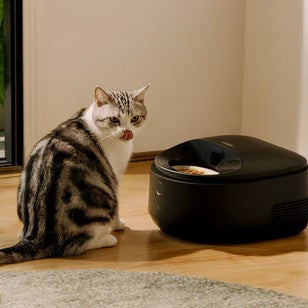
Automate the timing when your schedule gets in the way. A refrigerated feeder like the Polar Smart Wet Food Feeder keeps wet meals chilled and fresh for up to three days, then serves on the schedule you set, so your cat can be served wet food at its peak, even when you're out. It solves the freshness problem that usually keeps wet food off the menu.
Seeing the payoff
The benefit of wet feeding shows up over time, in steadier hydration and litter box output. When you add moisture through food, you often see it reflected downstream: more consistent urine volume, better-hydrated skin and coat, and comfortable digestion.
This is where drinking and litter box tracking helps. Pair moisture-rich meals with a way to see the results, whether that's watching the litter box more closely, or leaning on tools that track intake and output for you. A smart litter box like the Luma Smart Litter Box tracks what comes out and flags the unusual, so the effort you put into feeding turns into feedback you can actually use.
The takeaway
Wet food is one of the simplest, most natural ways to raise your cat's water intake, because it feeds hydration and nutrition in the same bite. Add at least one wet meal a day, solve the freshness problem so it fits your schedule, and watch the payoff show up in your cat's hydration and wellness over time. Small changes lead to steady return.
Next in the series: How to bring hydration, litter box habits, and feeding together into a simple home wellness routine.